

Neck and shoulder pain is one of the most common modern complaints — and for good reason. Long hours at a desk, phone use, poor posture, stress, and lack of movement can all cause tight, aching muscles that affect your daily comfort and sleep.
At BodyReliefHub, we focus on safe, practical, and realistic ways to relieve neck and shoulder tension at home. Whether your discomfort is mild stiffness or ongoing tightness, this guide will help you understand the causes and explore simple relief strategies.
Common Causes of Neck & Shoulder Pain
Neck and shoulder discomfort often develops gradually. Some of the most common causes include:
- Poor posture (especially forward head posture)
- Desk or laptop work without ergonomic support
- Phone and tablet use (“text neck”)
- Stress and tension causing muscle tightness
- Sleeping position or pillow issues
- Lack of movement or stretching
- Carrying heavy bags on one shoulder
These muscles are constantly working to support your head and upper body, so even small habits can create long-term strain.
Signs Your Neck & Shoulders Need Attention
You may benefit from targeted neck and shoulder relief if you notice:
- Tight or knotted muscles
- Reduced range of motion
- Headaches starting at the base of the skull
- Shoulder stiffness or burning sensations
- Pain when turning your head
- Discomfort after sitting or driving
- Upper back tension between the shoulder blades
Ignoring these signals can lead to ongoing discomfort, so early action matters.
Simple At-Home Relief Strategies
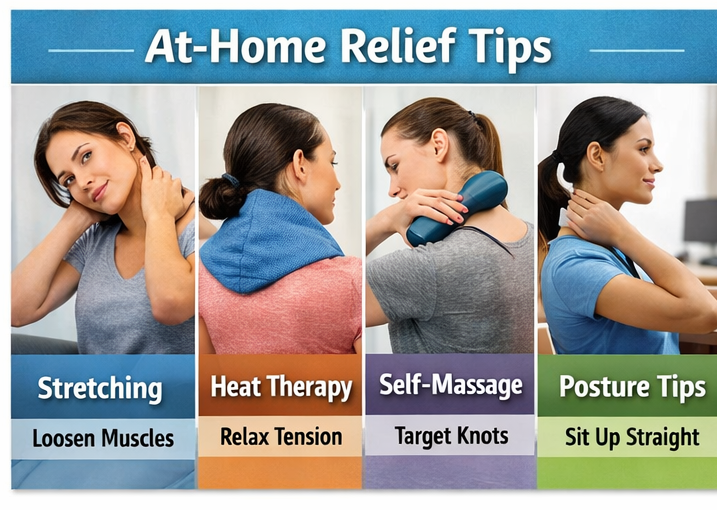
1. Gentle Stretching
Regular, gentle stretches can help improve flexibility and reduce tightness.
Try:
- Slow neck rotations
- Shoulder rolls
- Side neck stretches (ear to shoulder)
- Chest opening stretches to counter slouching
Consistency is more important than intensity.
2. Heat Therapy
Heat can help relax tight muscles and improve blood flow.
Options include:
- Heated neck wraps
- Microwavable heat pads
- Warm showers
Heat is especially useful for tension caused by stress or posture.
3. Self-Massage Tools
Massage tools allow you to target tight areas without professional equipment.
Popular options:
- Massage balls
- Trigger point tools
- Neck massagers
- Foam rollers for upper back support
These can be effective when used gently and regularly.
4. Posture Awareness
Small posture adjustments can make a big difference.
Helpful tips:
- Keep screens at eye level
- Relax shoulders (avoid hunching)
- Support your lower back when seated
- Take regular movement breaks
- Avoid holding your phone at chest level
Improving posture reduces the strain placed on your neck muscles throughout the day.
5. Sleep Support
Your sleeping position plays a major role in neck comfort.
Consider:
- A supportive pillow that keeps your neck neutral
- Avoiding stomach sleeping if possible
- Ensuring your mattress supports your upper body
Even a small pillow change can improve morning stiffness.
When to Be Cautious
If your neck or shoulder pain:
- Is severe or worsening
- Follows an injury or accident
- Includes numbness, tingling, or weakness
- Does not improve with basic care
You should seek advice from a qualified healthcare professional.

Explore More Neck & Shoulder Relief Resources
On BodyReliefHub, you’ll find:
- Simple neck and shoulder stretches
- Reviews of massage tools and supports
- Posture and desk health guides
- Heat and recovery solutions
- Sleep and pillow recommendations
Our goal is to help you feel better naturally, safely, and sustainably — without overwhelm.
Start Feeling Better Today
Neck and shoulder pain doesn’t have to control your day. Small, consistent habits can lead to noticeable relief over time.

👉 Explore our Neck & Shoulder Pain Relief guides to find what works best for you.