
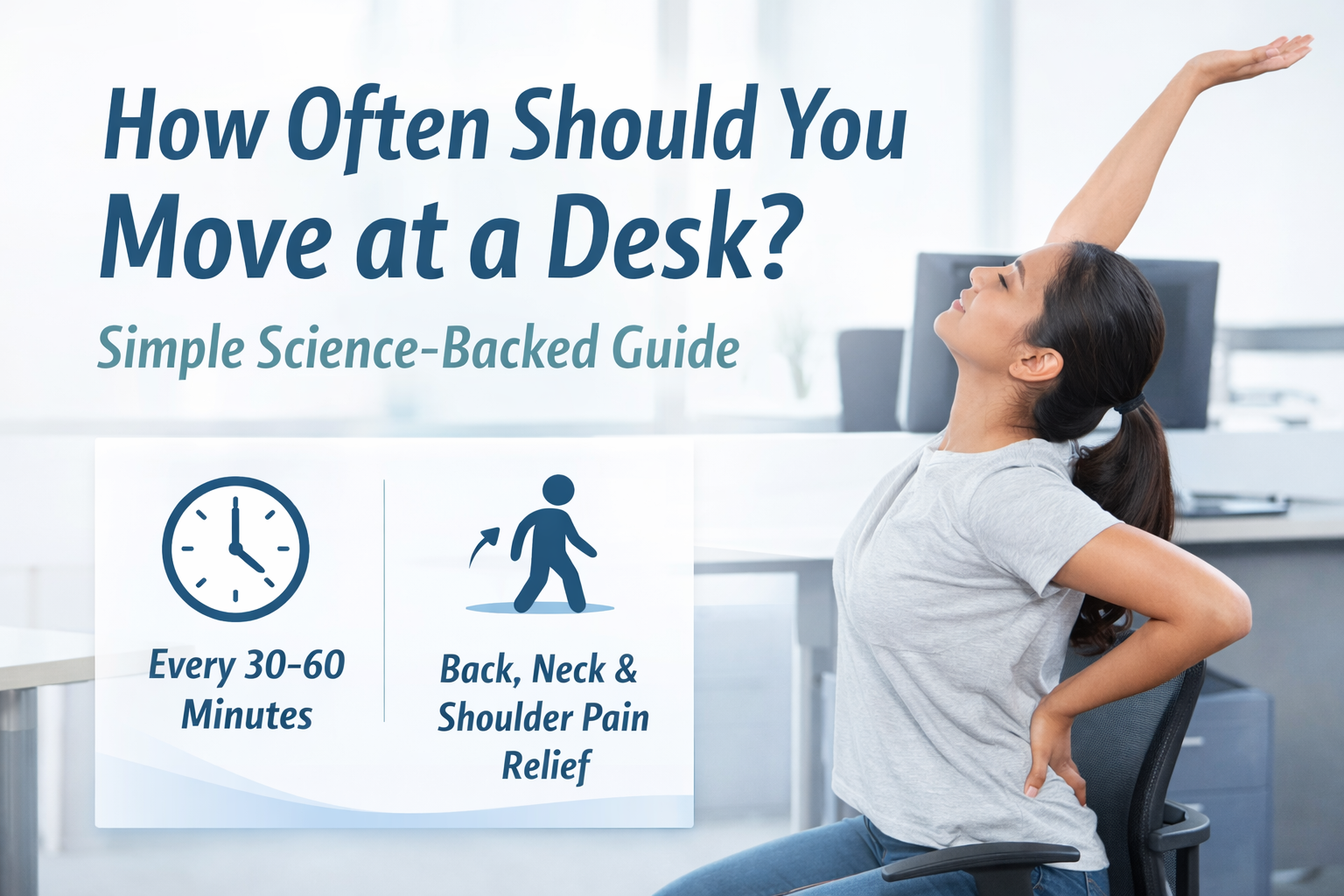
Spending long hours at a desk is one of the biggest contributors to back pain, neck tension, shoulder stiffness, and poor posture. Even if you sit with “perfect posture,” staying still for too long places stress on your muscles, joints, and circulation.
So the real question isn’t how to sit perfectly — it’s how often should you move at a desk?
Why Sitting Too Long Causes Pain
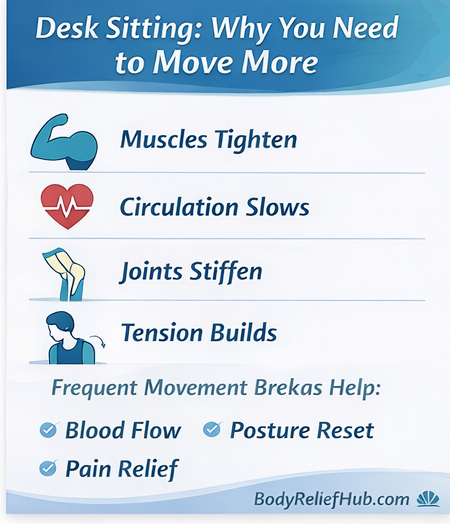
When you stay seated for long periods:
- Muscles become tight and under-used
- Blood flow slows down
- Joints stiffen
- Postural muscles fatigue
This leads to common desk-related issues like:
- Neck and shoulder tension
- Lower back pain
- Headaches
- Stiff hips and reduced mobility
Movement is the solution — not just better chairs or posture.
How Often Should You Move at a Desk?
✅ The Simple Answer:
Every 30–60 minutes
You don’t need long workouts or complicated routines. Small, regular movement breaks are far more effective.
Recommended movement frequency:
- Every 30 minutes: Quick posture reset or micro-movement
- Every 60 minutes: Stand up and move for 1–2 minutes
- Throughout the day: Gentle stretches and position changes
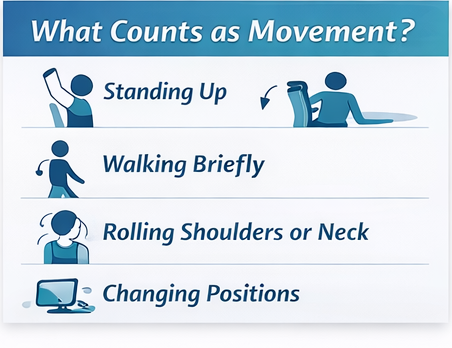
What Counts as “Movement”?
Movement doesn’t have to mean exercise. Effective desk movement includes:
- Standing up from your chair
- Walking to get water
- Rolling shoulders or neck
- Gentle spinal twists
- Stretching hips, chest, or upper back
Even 60–90 seconds of movement can reset your body.
The 30–60 Minute Desk Movement Rule (Easy to Follow)
Use this simple structure during your workday:
Every 30 Minutes
- Relax shoulders
- Sit tall or change position
- Take 3–5 slow breaths
Every 60 Minutes
- Stand up
- Walk for 1–2 minutes
- Do a quick stretch
This approach reduces stiffness without interrupting productivity.
Why Regular Movement Beats “Perfect Posture”
Many people try to hold one “perfect” sitting position all day — but the body isn’t designed for that.
👉 The best posture is your next posture.
Frequent movement:
- Reduces muscle fatigue
- Improves circulation
- Keeps joints healthy
- Prevents tension from building
Changing position regularly is more important than sitting perfectly.
Best Desk Movements to Do During the Day
Try mixing these into your workday:
- Shoulder rolls
- Neck side stretches
- Shoulder blade squeezes
- Standing hip flexor stretch
- Gentle spinal twists
These take less than 2 minutes and make a noticeable difference.
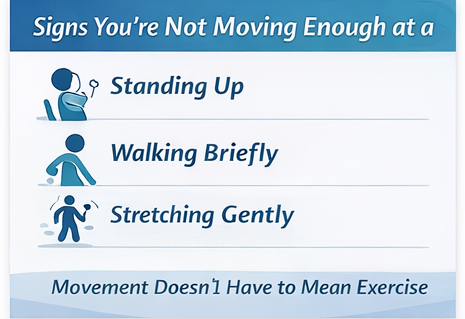
Signs You’re Not Moving Enough at a Desk
You may need more movement if you notice:
- Tight neck or shoulders by mid-day
- Lower back stiffness
- Frequent headaches
- Tingling or heaviness in arms or legs
These are signs your body is asking for movement.
Desk Setup Still Matters (But Movement Comes First)
Good desk ergonomics help, but they don’t replace movement.
For best results:
- Screen at eye level
- Feet flat on the floor
- Elbows close to your body
- Chair supporting your lower back
Then combine this with regular movement breaks.
Final Takeaway
If you work at a desk, aim to:
- Move every 30–60 minutes
- Stand up regularly
- Stretch gently throughout the day
Small, frequent movements prevent pain far better than long stretches done occasionally.
Your body doesn’t need perfection — it needs movement.
Medical Disclaimer
This content is for educational purposes only and does not replace professional medical advice. If pain persists or worsens, consult a qualified healthcare professional.