
Back pain is one of the most common problems affecting adults today — especially those who spend long hours sitting, driving, or working at a desk. The good news is that many everyday back pain issues can be improved with a few simple, consistent habits.
This guide explains what really helps, what to avoid, and how to start reducing back pain safely.
Quick Summary
If you’re short on time, here’s what helps most people with everyday back pain:
- Move little and often throughout the day
- Improve posture rather than forcing it
- Use heat or gentle massage for muscle tension
- Strengthen your core gradually
- Avoid pushing through sharp or worsening pain
Consistency matters more than intensity.
Who This Guide Is For (And Who It Isn’t)
This guide is suitable for:
- General lower or upper back stiffness
- Desk-related back pain
- Muscle tightness and tension
- Mild to moderate recurring back pain
This guide is NOT suitable if you have:
- Severe or sudden trauma
- Loss of bladder/bowel control
- Progressive numbness or weakness
- Pain following a fall or accident
If you have any of the above, seek medical advice before trying self-care strategies.
Why Back Pain Is So Common Today
Modern back pain is rarely caused by one single issue. Instead, it’s usually a combination of:
- Prolonged sitting
- Reduced daily movement
- Muscle imbalances
- Stress and tension
- Poor sleep quality
The body adapts to what we do most — and for many people, that means long periods of sitting with limited movement.
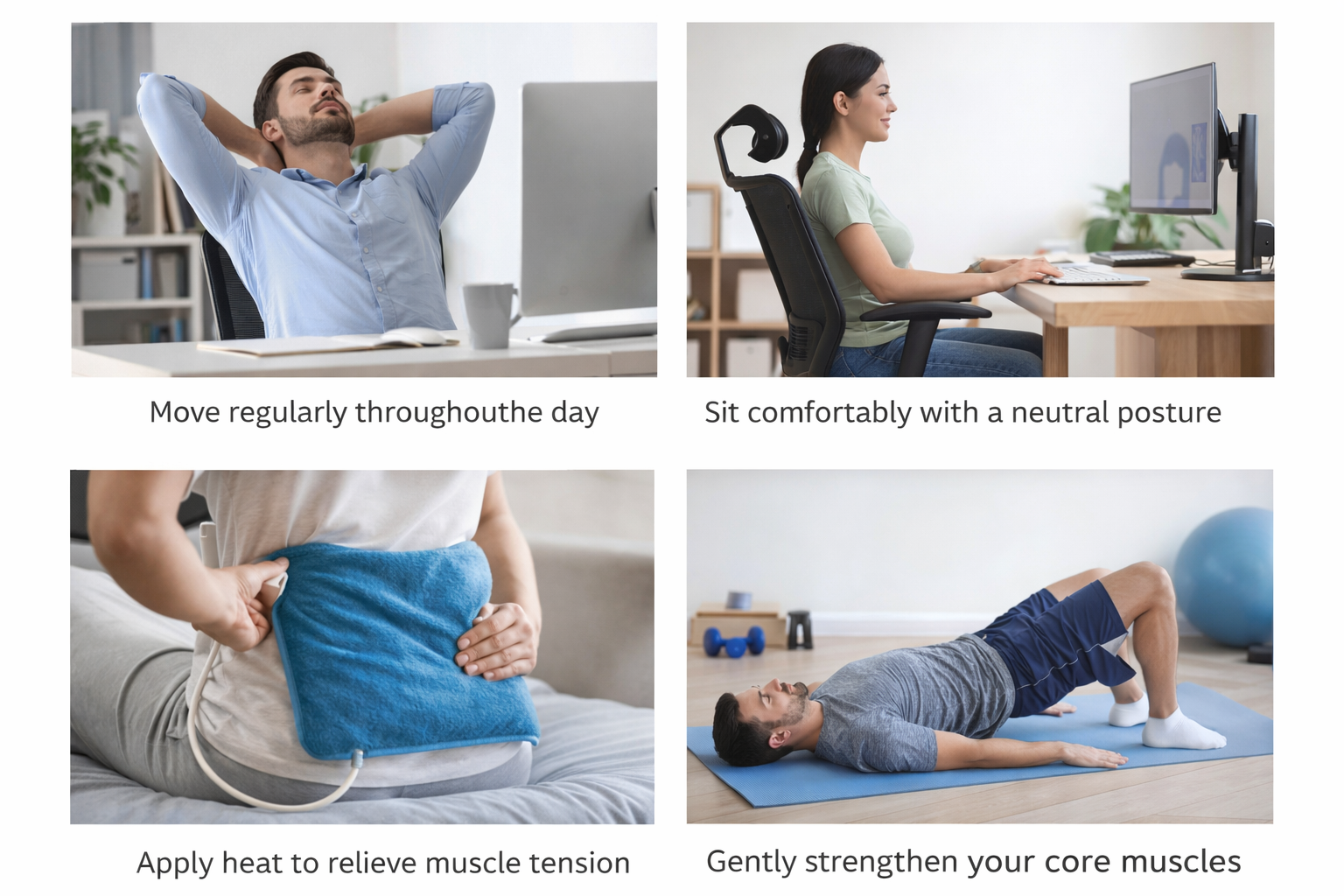
1. Move More — But Gently
One of the biggest mistakes people make with back pain is doing nothing.
Gentle, regular movement helps:
- Improve blood flow
- Reduce muscle stiffness
- Prevent joints from becoming rigid
Simple ways to add movement:
- Stand up every 30–45 minutes
- Walk for 5 minutes every hour
- Do gentle spinal movements (cat-cow, hip circles)
- Change positions often
You don’t need intense exercise — just regular movement.
2. Improve Posture (Don’t Force It)
Good posture is about comfort and balance, not sitting rigidly straight.
Helpful posture tips:
- Keep feet flat on the floor
- Let your shoulders relax down and back
- Sit on your sit bones, not your lower back
- Screen at eye level if possible
Avoid “holding” posture all day — this creates tension.
Instead, aim for variety in your positions.
3. Use Heat or Gentle Massage for Muscle Tension
Heat and massage can be very effective for muscular back pain.
Heat therapy helps by:
- Relaxing tight muscles
- Increasing circulation
- Reducing stiffness
Massage tools can help:
- Release tight areas
- Improve local blood flow
- Reduce stress-related tension
Later guides on BodyReliefHub will cover massage guns, foam rollers, and heat devices in detail.
4. Strengthen the Core (Slowly)
A weak or underused core can place extra strain on the back.
You don’t need extreme workouts — simple exercises done consistently work best.
Beginner-friendly core movements:
- Pelvic tilts
- Dead bugs
- Glute bridges
- Side planks (short holds)
Start small and increase gradually. Pain during exercise is a sign to stop.
5. Pay Attention to Sleep & Recovery
Poor sleep can significantly increase pain sensitivity.
Sleep tips for back pain:
- Use a supportive mattress
- Choose a pillow that keeps your neck neutral
- Side sleepers: pillow between knees
- Back sleepers: pillow under knees
Recovery is just as important as movement.
Common Mistakes to Avoid
- Pushing through sharp pain
- Staying completely inactive
- Relying on painkillers alone
- Copying advanced exercises too early
- Ignoring stress and tension
Back pain usually improves with balanced, steady care, not extremes.
When to Expect Improvement
Many people notice small improvements within:
- 1–2 weeks of consistent movement
- 3–6 weeks with posture and strengthening changes
Progress is rarely linear — good days and bad days are normal.
Next Steps
If you want to go deeper, explore these related guides on BodyReliefHub:
- Best Daily Stretches for Back Pain
- Heat vs Cold Therapy for Back Pain
- Best Massage Tools for Lower Back Tension
- How Desk Setup Affects Back Pain
👉 Coming soon
Final Thoughts
Back pain can feel frustrating, but for many people it’s manageable with the right approach. Focus on small, sustainable habits, listen to your body, and avoid rushing the process.
BodyReliefHub exists to help you make informed, safe choices — without hype or unrealistic promises.