
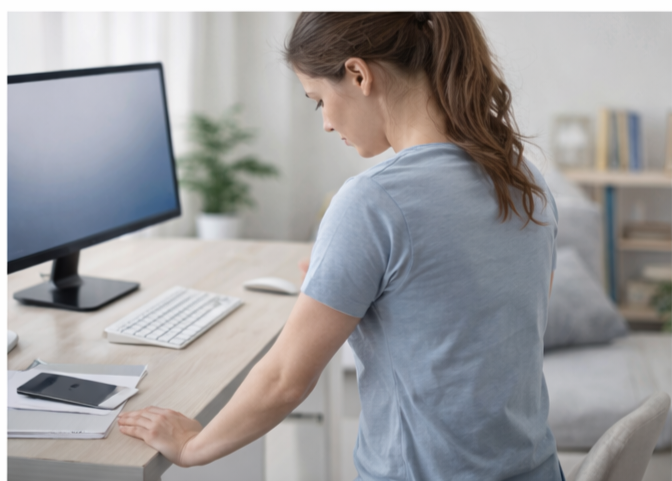
Poor desk habits are one of the most common contributors to back, neck, and shoulder pain. Long periods of sitting, screen use, and limited movement can place unnecessary strain on the body — even if your posture looks “good”.
This hub brings together practical, realistic guidance to help you sit more comfortably, move more often, and reduce tension during the workday without forcing rigid posture.
Start Here: Desk Health Basics
If you spend several hours a day sitting or working at a screen, start with these foundations.
- Desk Posture: Simple Adjustments That Actually Help
Learn how small changes to your setup can reduce strain. - How Often Should You Move at a Desk?
Why movement matters more than perfect posture.
The goal is comfort and variety, not holding one position all day.
Why Desk Health Matters
Prolonged sitting and screen use can contribute to:
- Back stiffness
- Neck and shoulder tension
- Headaches
- Reduced circulation
- Fatigue and discomfort
Desk-related pain often develops gradually and improves with small, consistent changes rather than major interventions.

Posture: What Actually Helps
Good posture isn’t about sitting rigidly upright.
Helpful posture principles include:
- Sitting comfortably on your sit bones
- Letting shoulders relax rather than pulling them back
- Keeping your head balanced over your shoulders
- Changing position regularly
Forcing posture often increases muscle tension.
👉 Posture guides coming soon
Desk Setup & Ergonomics
A well-arranged desk can reduce unnecessary strain.
We cover:
- Screen height and distance
- Chair height and support
- Keyboard and mouse positioning
- Laptop vs desktop considerations
Small adjustments can make a noticeable difference over time.
👉 Desk setup guides coming soon
Movement Breaks & Daily Habits
Movement is one of the most important aspects of desk health.
Helpful habits include:
- Standing up every 30–45 minutes
- Short walking breaks
- Gentle stretches during the day
- Changing sitting positions
You don’t need long workouts — regular movement is more effective.
Stretching for Desk-Related Tension
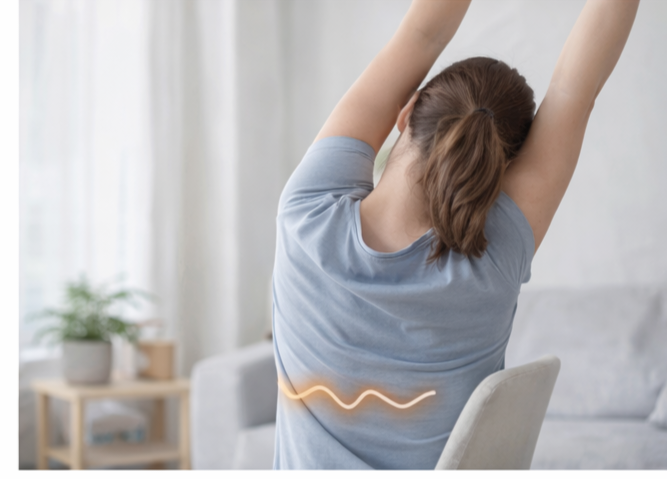
Stretching can help reduce stiffness caused by prolonged sitting.
Focus areas include:
- Upper back
- Neck and shoulders
- Hips and lower back
Stretching should be gentle and comfortable.
👉 Desk stretching guides coming soon
Managing Desk-Related Stress
Stress often shows up physically in the neck, shoulders, and upper back.
Helpful strategies include:
- Relaxed breathing
- Regular breaks
- Reducing muscle tension awareness
- Supporting good sleep
Desk health isn’t just physical — mental fatigue matters too.
Common Desk Health Mistakes
Avoid:
- Sitting still for hours at a time
- Forcing “perfect posture”
- Ignoring early signs of stiffness
- Relying on posture aids alone
- Skipping movement breaks
Comfort and consistency matter more than strict rules.
When to Seek Medical Advice
The guidance in this hub is intended for everyday desk-related discomfort.
Seek medical advice if you experience:
- Severe or worsening pain
- Pain following injury or trauma
- Numbness or weakness
- Symptoms that don’t improve with movement and rest
Recommended Next Steps
If you work at a desk:
- Adjust screen and chair height
- Add regular movement breaks
- Improve comfort rather than posture perfection
- Stretch gently throughout the day
Small changes repeated daily are more effective than one-off fixes.
Free Pain Relief Starter Guide
Looking for a simple place to begin?
Download our free Pain Relief Starter Guide — a short daily routine designed to help reduce back, neck, and shoulder tension.
✔ Beginner-friendly
✔ No equipment needed
✔ Suitable for busy schedules
Check out our Downloads page where you will find a selection of free PDF files.
Explore More on BodyReliefHub
Final Note
Desk-related discomfort is extremely common, but it’s often manageable with improved habits, regular movement, and realistic expectations. BodyReliefHub is here to help you build a more comfortable workday.