
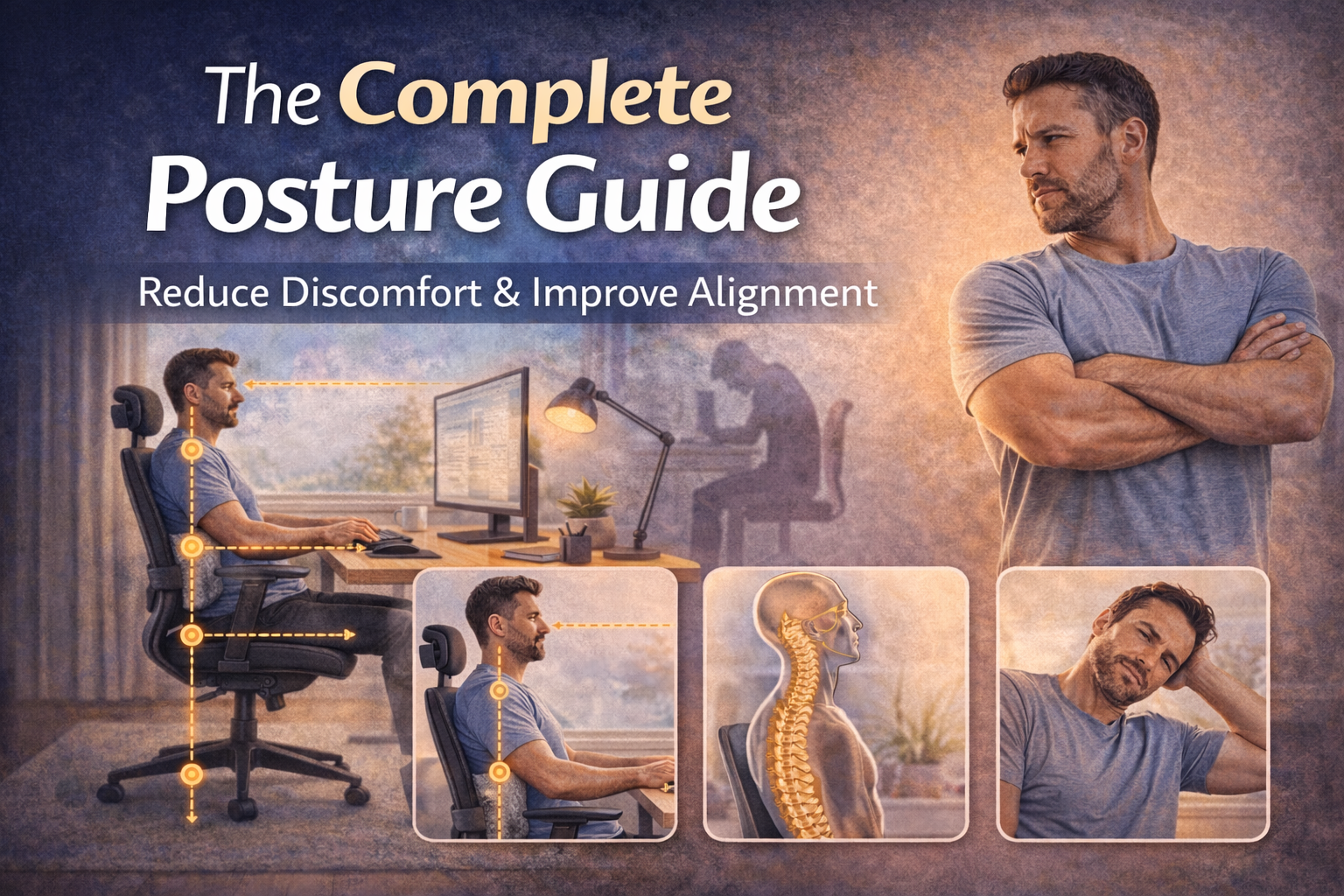
Posture plays a major role in how your body feels each day. Poor posture doesn’t just affect how you look — it can contribute to neck pain, back pain, headaches, shoulder tension, and fatigue.
The good news is that posture isn’t about sitting or standing perfectly all the time. It’s about building awareness, moving regularly, and supporting your body throughout the day.
This guide explains what good posture really means, how poor posture causes pain, and simple ways to improve it.
What Is Posture (Really)?
Posture refers to how your body is aligned while:
- Sitting
- Standing
- Walking
- Working at a desk
- Sleeping
Good posture allows your joints and muscles to work efficiently, placing less strain on your spine and soft tissues.
Poor posture increases stress on muscles and joints, leading to stiffness, tension, and long-term discomfort.
How Poor Posture Causes Pain
When posture is poor for long periods:
- Muscles become overworked and tight
- Joints move less efficiently
- Blood flow is reduced
- Pain sensitivity increases
Common posture-related pain includes:
- Neck and shoulder tension
- Upper and lower back pain
- Headaches
- Hip and knee discomfort
Sitting for long hours without movement is one of the biggest contributors.
What Good Posture Looks Like (Simple Breakdown)
Standing Posture
- Head stacked over shoulders
- Shoulders relaxed, not pulled back stiffly
- Ribcage over hips
- Weight evenly distributed on both feet
Think “tall and relaxed”, not rigid.
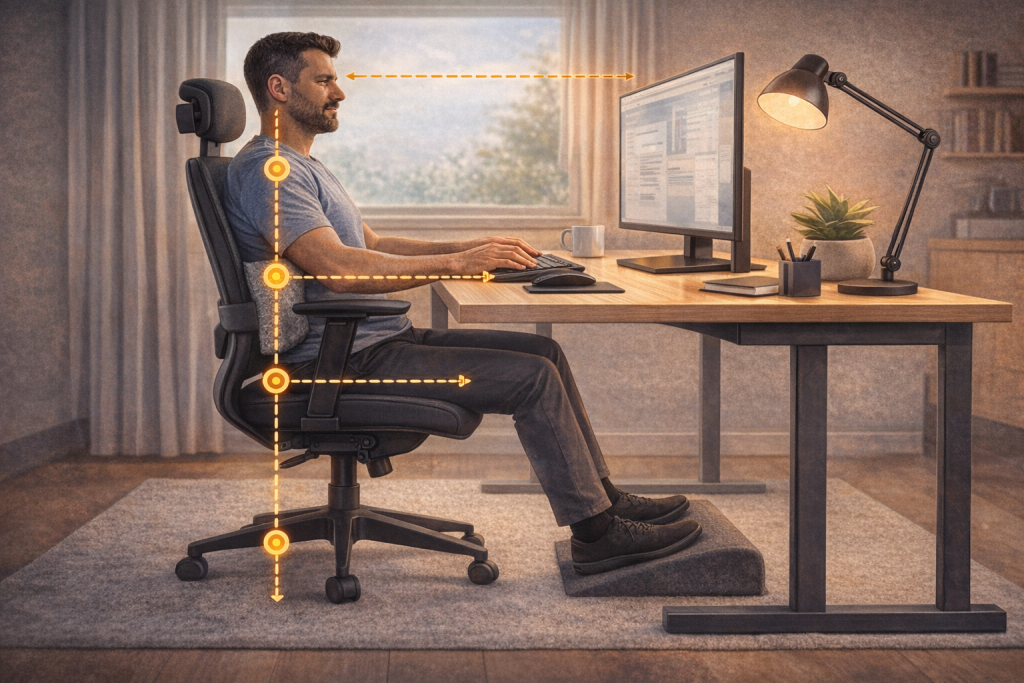
Sitting Posture (Desk or Sofa)
- Feet flat on the floor
- Hips slightly higher than knees
- Lower back supported
- Screen at eye level
- Shoulders relaxed
No posture is perfect forever — movement matters more than stillness.
Desk Posture Tips for Pain Relief
If you work at a desk, these small adjustments can help significantly:
- Screen at eye level
- Chair supporting the lower back
- Elbows close to your body
- Wrists neutral (not bent up or down)
- Take posture breaks every 30–60 minutes
Even a “perfect” desk setup won’t help if you don’t move regularly.
Posture and Movement Go Hand in Hand
Posture is dynamic, not static.
The best posture is:
- One you can change often
- Supported by regular movement
- Paired with mobility and stretching
Short movement breaks help reset posture and reduce stiffness far more than holding one position all day.
Common Posture Myths (That Make Pain Worse)
❌ “Sit up straight at all times”
This often leads to tension and fatigue.
❌ “Good posture means stiff posture”
Relaxed alignment is better than rigid control.
❌ “Posture alone causes pain”
Pain is influenced by stress, movement, sleep, and habits — posture is just one piece.
Simple Daily Habits to Improve Posture
- Change positions frequently
- Use gentle mobility exercises daily
- Stretch tight areas (neck, hips, chest)
- Strengthen postural muscles gradually
- Improve sleep and recovery
Small daily habits are more effective than forcing posture corrections.
Posture While Sleeping
Sleep posture matters too.
Helpful tips:
- Side sleepers: pillow between knees
- Back sleepers: pillow under knees
- Support the neck so it stays neutral
Poor sleep posture can contribute to morning stiffness and pain.
Final Thoughts
Posture isn’t about perfection — it’s about awareness, variety, and movement.
Improving posture gradually, alongside daily mobility and regular breaks, can reduce pain, improve comfort, and support long-term joint health.
If you’re dealing with ongoing discomfort, posture is often part of the solution — but never the only focus.
Related BodyReliefHub Guides
- Desk Posture & Movement Checklist
- Simple Daily Mobility Routines
- How Sleep Affects Pain & Recovery
- Neck & Shoulder Tension Relief