
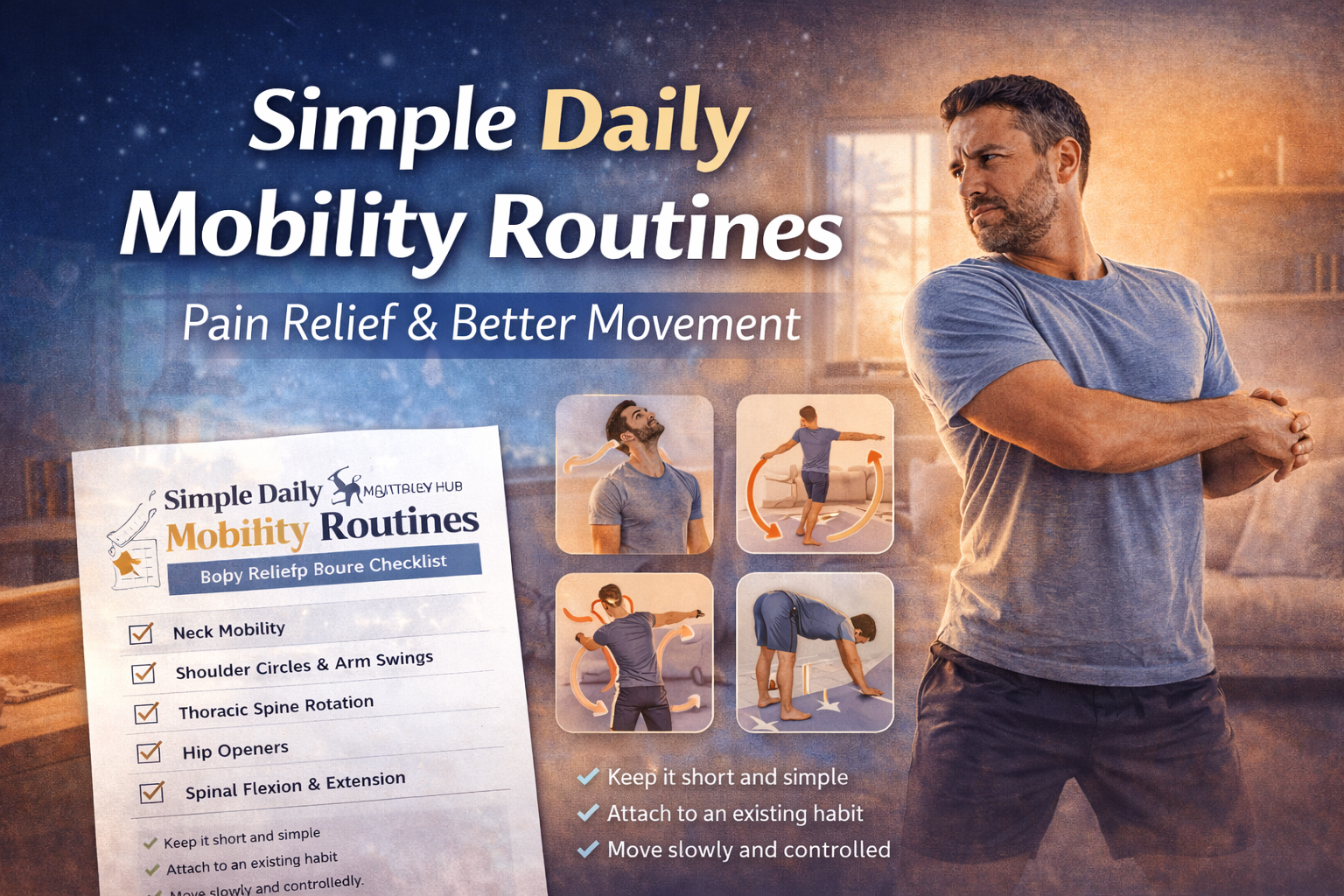
Daily mobility is one of the most effective — and overlooked — ways to reduce pain, improve flexibility, and keep your body moving well. You don’t need long workouts or complex routines. Just a few minutes of consistent mobility work each day can make a real difference.
If you struggle with stiffness, back pain, neck and shoulder tension, or tight hips from sitting too much, a simple daily mobility routine can help restore movement and support recovery.
What Is Mobility (and Why It Matters)?
Mobility refers to your ability to move joints through their full, controlled range of motion. Unlike stretching alone, mobility combines movement, control, and stability.
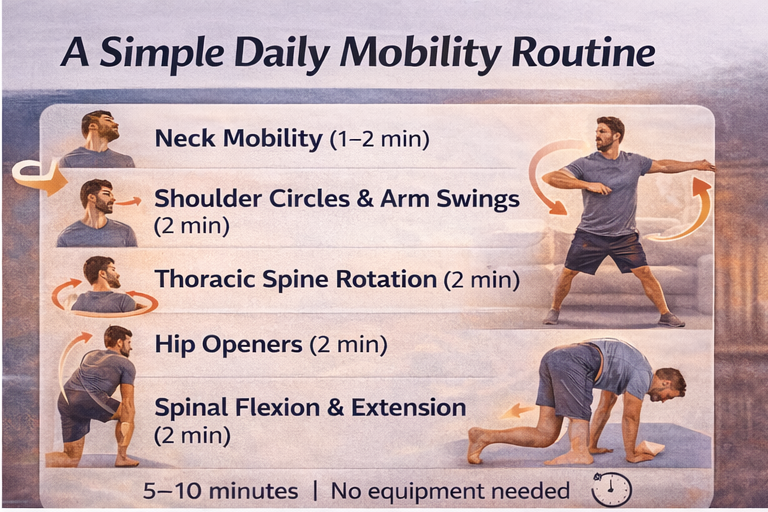
Good mobility helps:
- Reduce muscle stiffness
- Improve posture and joint health
- Decrease pain and tension
- Support better movement during daily activities
Poor mobility often leads to compensations, which can cause recurring aches and injuries over time.
Why Daily Mobility Helps with Pain Relief
When you don’t move regularly:
- Muscles tighten
- Joints become stiff
- Blood flow decreases
- Pain sensitivity increases
Daily mobility routines help reverse these effects by keeping tissues hydrated, joints
lubricated, and the nervous system calm.
Even 5–10 minutes a day can help reduce back pain, neck tension, and general stiffness.
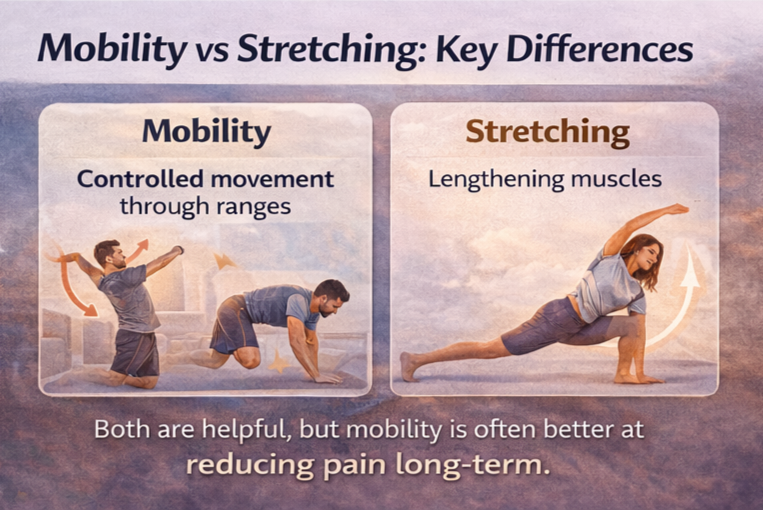
A Simple Daily Mobility Routine (10 Minutes)
This gentle routine can be done at home with no equipment and is suitable for most people.
1. Neck Mobility (1–2 minutes)
- Slow neck rotations
- Gentle side bends
- Controlled chin tucks
Helps relieve neck stiffness and desk-related tension.
2. Shoulder Circles & Arm Swings (2 minutes)
- Forward and backward shoulder rolls
- Controlled arm circles
- Light arm swings
Improves shoulder mobility and reduces upper-body tightness.
3. Thoracic Spine Rotation (2 minutes)
- Seated or standing torso rotations
- Slow and controlled movement
Helps counteract poor posture and improves upper-back mobility.
4. Hip Openers (2 minutes)
- Hip circles
- Gentle lunges or standing hip swings
Essential for reducing lower back pain and improving walking mechanics.
5. Spinal Flexion & Extension (2 minutes)
- Cat-cow movements
- Slow spinal rolls
Keeps the spine mobile and reduces stiffness from prolonged sitting.
When Is the Best Time to Do Mobility Work?
The best time is when you’ll actually do it consistently.
Popular options include:
- Morning: to loosen stiffness after sleep
- Midday: as a movement break from sitting
- Evening: to unwind and reduce tension
Many people benefit from short mobility breaks throughout the day, especially if they work at a desk.
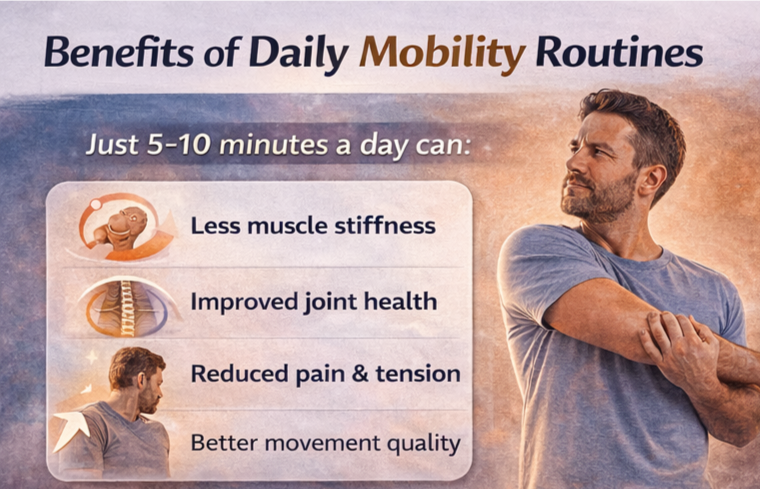
Mobility vs Stretching: What’s the Difference?
- Stretching focuses on lengthening muscles
- Mobility focuses on controlled movement through ranges
Mobility tends to be more effective for long-term pain relief because it improves joint control and movement quality, not just flexibility.
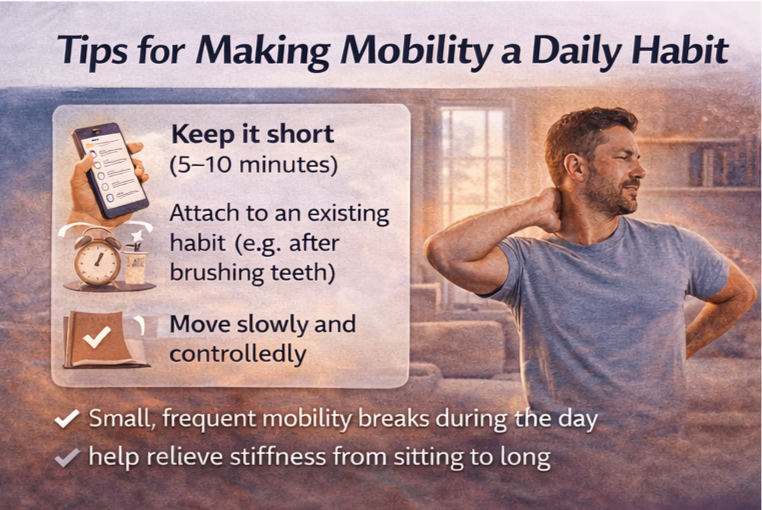
Tips to Make Mobility a Daily Habit
- Keep it short and simple
- Attach it to an existing habit (after brushing teeth, before bed)
- Focus on slow, controlled movements
- Stop before pain — mobility should feel relieving, not forced
Consistency matters more than intensity.
Who Benefits Most from Daily Mobility?
Daily mobility routines are especially helpful if you:
- Sit for long periods
- Experience recurring back or neck pain
- Feel stiff in the morning
- Exercise but don’t move much outside workouts
Mobility helps keep your body resilient between workouts and daily activities.
Final Thoughts
Daily mobility is one of the simplest ways to support pain relief, movement quality, and long-term joint health. You don’t need perfect technique or long sessions — just regular, gentle movement.
If pain or stiffness keeps returning, improving daily mobility is often the missing piece.
Related BodyReliefHub Guides
- Best Daily Stretches for Back Pain
- Desk Posture & Movement Checklist
- How Sleep Affects Pain & Recovery
- Evening Wind-Down & Recovery Guide