

Heat and cold therapy are two of the most commonly used methods for managing back pain. Both can be helpful — but they work in different ways and are best used in different situations.
This guide explains when to use heat, when to use cold, and how to use each safely for everyday back pain.
Quick Summary
- Heat therapy is best for muscle tension, stiffness, and ongoing back pain
- Cold therapy is best for flare-ups, inflammation, or sudden pain
- Many people benefit from using both at different times
- Neither should cause pain or discomfort when used correctly
Who This Guide Is For
This guide is suitable for people with:
- Muscle tightness or stiffness in the back
- Desk-related or posture-related back pain
- Mild to moderate recurring back pain
- Occasional flare-ups of discomfort
Not suitable if you have:
- Severe or worsening pain
- Pain following a serious injury or accident
- Loss of sensation in the affected area
- Circulatory or nerve conditions without medical advice
If unsure, consult a healthcare professional before using heat or cold therapy.
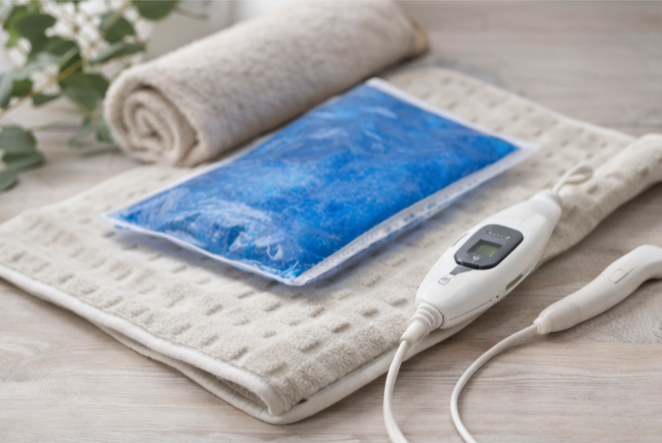
How Heat and Cold Therapy Work
Heat Therapy
Heat works by:
- Increasing blood flow
- Relaxing tight muscles
- Improving tissue flexibility
- Reducing stiffness
It helps the body relax and loosen, making movement more comfortable.
Cold Therapy
Cold works by:
- Reducing inflammation
- Numbing sore areas
- Slowing nerve signals
- Limiting swelling
It helps calm irritated or inflamed tissues, especially during flare-ups.

When to Use Heat Therapy
Heat is usually best for ongoing or chronic muscle tension.
Heat therapy may help if your back pain feels:
- Stiff or tight
- Dull or aching
- Worse after long periods of sitting
- Better with gentle movement
Common heat options:
- Heat packs
- Electric heating pads
- Warm showers or baths
How to Use Heat Safely
- Apply heat for 15–20 minutes
- Use a moderate, comfortable temperature
- Always place a layer (towel or cover) between heat and skin
- Never sleep with heat applied
Heat should feel soothing, not hot or irritating.
When to Use Cold Therapy
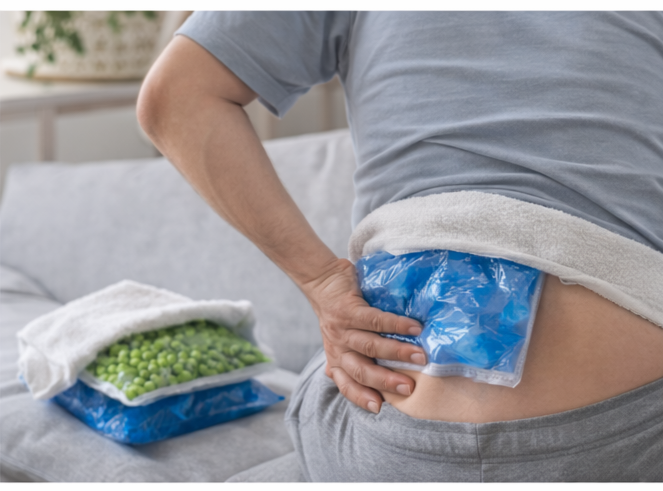
Cold therapy is often best for acute flare-ups or inflammation.
Cold therapy may help if your back pain feels:
- Sharp or irritated
- Inflamed or swollen
- Worse after activity
- Suddenly aggravated
Common cold options:
- Ice packs
- Gel cold packs
- Frozen peas wrapped in a towel
How to Use Cold Safely
- Apply cold for 10–15 minutes
- Always wrap ice packs in a cloth
- Allow skin to return to normal temperature between applications
- Do not apply directly to bare skin
Cold should feel cool and numbing, not painful.
Heat vs Cold: Which Should You Choose?
| Situation | Heat | Cold |
|---|---|---|
| Muscle stiffness | ✅ | ❌ |
| Tight lower back | ✅ | ❌ |
| Post-workday tension | ✅ | ❌ |
| Sudden flare-up | ❌ | ✅ |
| Inflammation | ❌ | ✅ |
| Morning stiffness | ✅ | ❌ |
If unsure, start with heat for stiffness and cold for irritation.
Can You Use Both?
Yes — many people benefit from using both at different times.
Example routine:
- Cold therapy during a flare-up
- Heat therapy later to relax muscles
- Gentle movement between sessions
Avoid switching too rapidly between heat and cold unless advised by a professional.
Common Mistakes to Avoid
- Using heat on fresh inflammation
- Applying cold for too long
- Sleeping with heat or ice applied
- Applying directly to bare skin
- Expecting instant results
Consistency and correct use matter more than intensity.
Combine Therapy With Movement
Heat and cold work best when combined with:
- Gentle movement
- Stretching routines
- Comfortable posture habits
- Adequate rest and sleep
👉 See:
- Back Pain Relief: Simple Daily Habits That Actually Help
- Best Daily Stretches for Back Pain (Safe & Simple)
When to Seek Medical Advice
When to Seek Medical Advice
Stop using heat or cold and seek medical advice if you experience:
- Increasing pain
- Numbness or tingling
- Changes in skin colour or sensation
- Pain following injury or trauma
Final Thoughts
Heat and cold therapy can be useful tools for managing back pain — when used at the right time and in the right way.
For most people:
- Heat helps ongoing stiffness and tension
- Cold helps flare-ups and irritation
Listen to your body, keep sessions short, and combine therapy with movement for best results.
Related Guides on BodyReliefHub
- Back Pain Relief: Simple Daily Habits That Actually Help
- Best Daily Stretches for Back Pain
- Best Massage Tools for Lower Back Tension (coming soon)